Kids Flossing: Tips for Healthy Teeth
By Shadow Creek Children's Dentistry and Orthodontics Editorial Team · Updated 2026-08-19
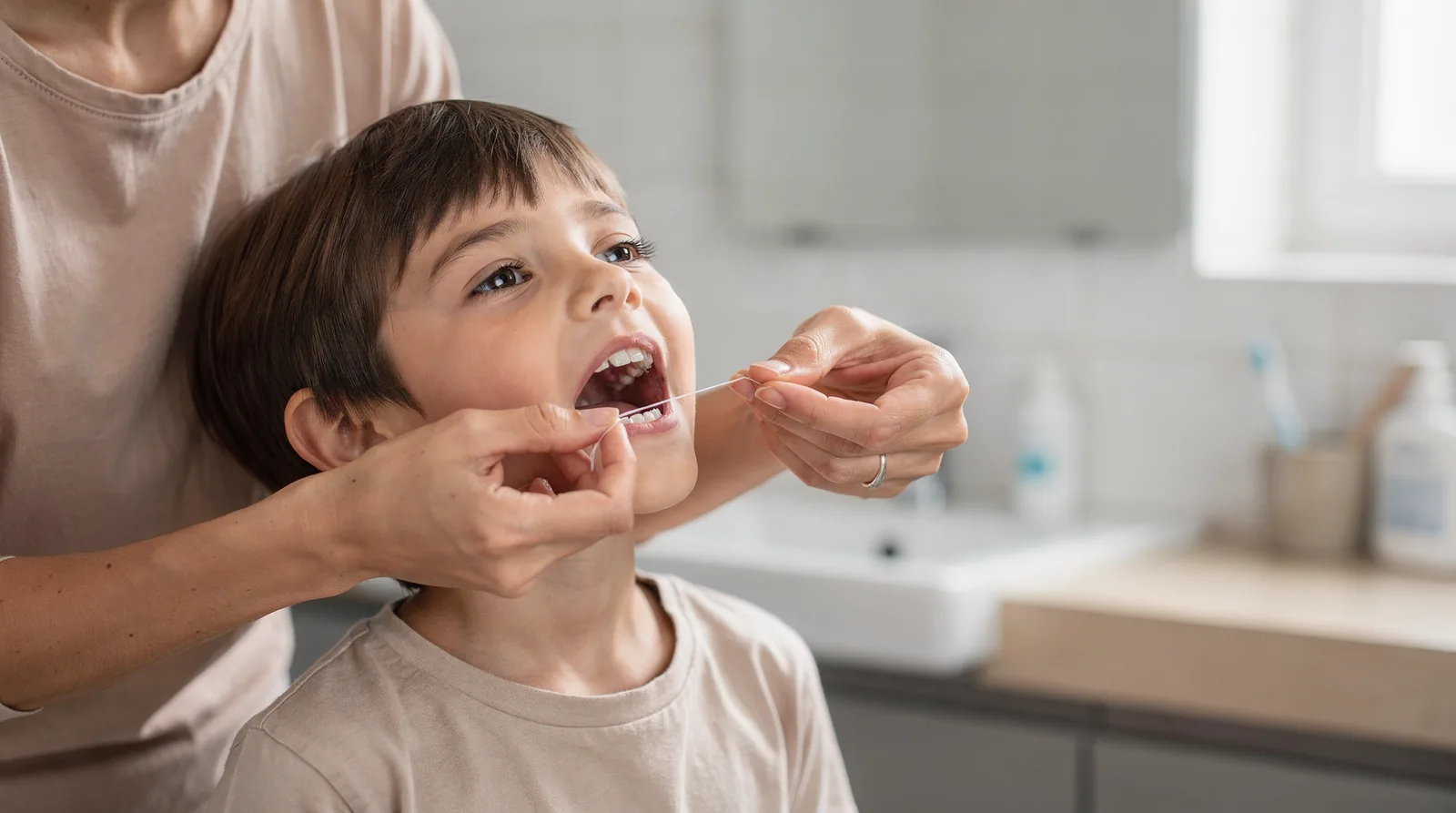
Effective flossing habits begin once two adjacent teeth touch, often between ages two and three, with parents assisting until age ten or eleven. We recommend hand flossing, floss sticks, or water flossers for braces, choosing whichever tool reliably clears plaque between teeth and below the gumline for growing smiles.
Key Takeaways
Start flossing when children have two adjacent teeth, typically around ages 2 to 3 years old.
Children require parental assistance with flossing until approximately ages 10 to 11 years old.
Traditional floss and floss sticks both effectively remove plaque between teeth when used consistently.
Flossing removes debris from between teeth that brushing alone cannot reach or clean properly.
When Should Kids Start Flossing Daily?
Two adjacent teeth mark the real starting line for daily flossing, not a specific birthday. For most children, that milestone lands somewhere between ages 2 and 3, once baby molars start touching. Skipping this step lets plaque build silently in spaces a toothbrush simply can't reach, setting the stage for early cavities between teeth that often go unnoticed until a checkup reveals decay.
We recommend parents handle kids flossing themselves in these early years, always following guidance from their child's dentist. Young children lack the fine motor control needed to floss effectively on their own. Hands-on help from a parent protects gum tissue while still removing hidden debris. Our board-certified pediatric dentists factor developmental readiness into every recommendation. No two children reach these milestones on the exact same timeline.
How do I know if my child is ready to start flossing?
Readiness shows up physically, not by age alone. Once two teeth sit close enough to touch, food and plaque get trapped between them, and a toothbrush can't clear that space. That gap is the clearest sign it's time to start.
Should I ask my dentist before I start flossing my child's teeth?
Yes, always. Guidance from a dental professional helps parents learn proper technique and avoid injuring sensitive young gums. During our new-patient comprehensive exam, families receive personalized dental floss tips and hands-on demonstrations for how to floss children safely at home. That combination of professional direction and daily home practice gives young smiles the strongest possible start.
How Do You Floss a Child's Teeth?
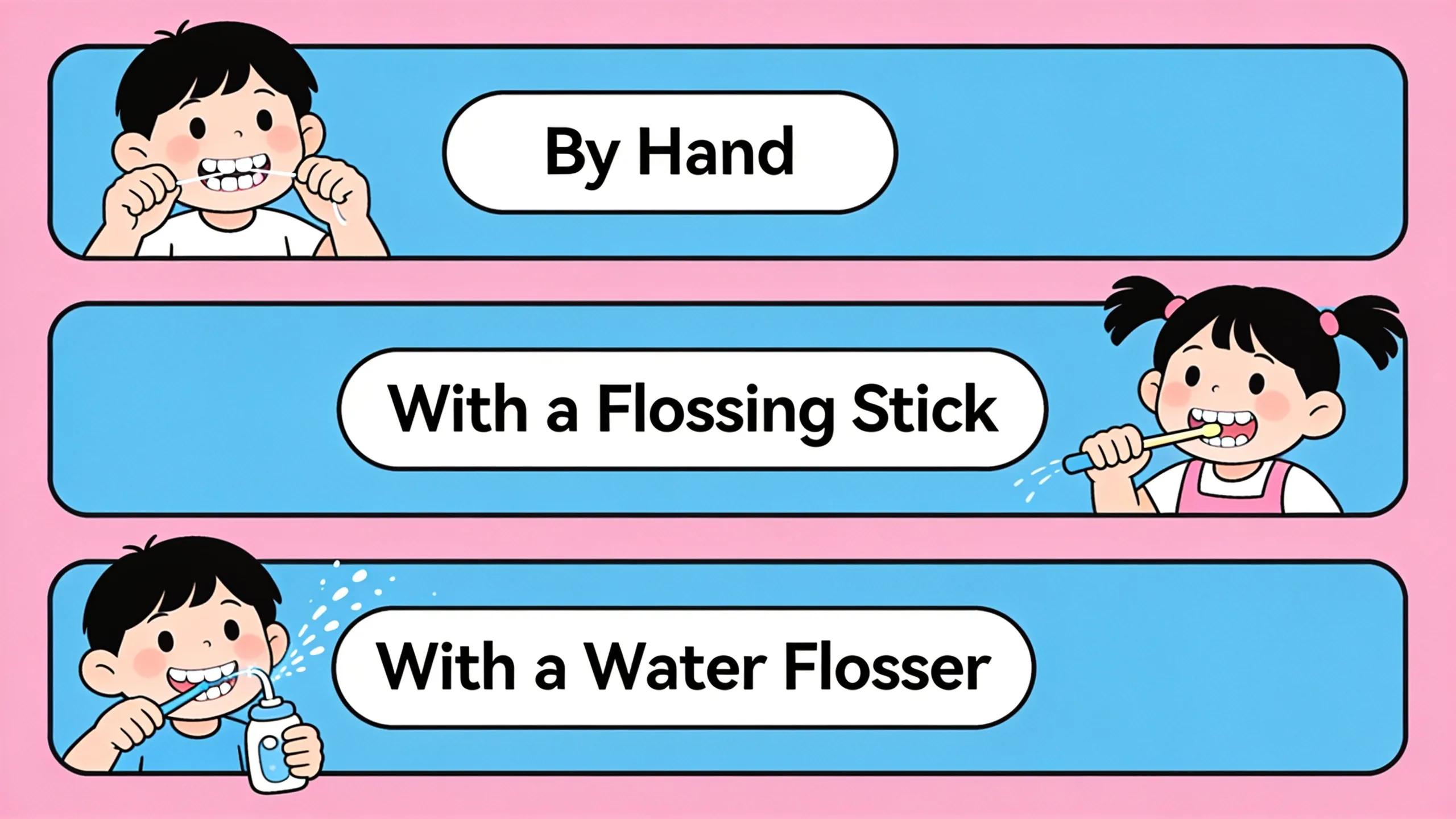
Three methods work well for cleaning between children's teeth: manual flossing by hand, a pre-threaded flossing stick, or a water flosser for kids wearing braces. Skipping this step lets plaque build up between teeth where a toothbrush bristle never reaches, raising the risk of cavities in spots parents can't see. We walk families through all three options at every visit, matching the method to a child's age, dexterity, and orthodontic status.
Kids flossing by hand remains our top recommendation for younger children. Wrapping the floss around a caregiver's fingers allows a clean section for each tooth space, which cuts down on re-spreading bacteria from one gap to the next. This hands-on approach also gives parents better visibility and control, especially in the back molars where cavities most often start.
What's the easiest tool for teaching how to floss children at home?
Flossing sticks tend to be the simplest starting point for families new to the routine. The pre-strung handle removes the awkward finger-wrapping step, making it easier for young hands or a rushed morning schedule.
Do kids with braces need a different flossing tool?
Yes. Children in active orthodontic treatment benefit most from a water pick, since traditional floss struggles to maneuver around brackets and wires. Our board-certified orthodontist offers braces and clear aligners on-site. Can point teens toward the flossing tool that fits their specific appliance.
Here's a quick breakdown of these dental floss tips:
Method | Best For | Key Advantage |
|---|---|---|
By hand | Younger children, close supervision | Clean floss section per tooth |
Flossing stick | Independent practice, quick use | Easier grip, less mess |
Water pick | Kids and teens with braces | Reaches around brackets and wires |
We encourage parents to try each method and stick with whichever one keeps the habit consistent night after night.
What Dental Floss Tips Actually Work?
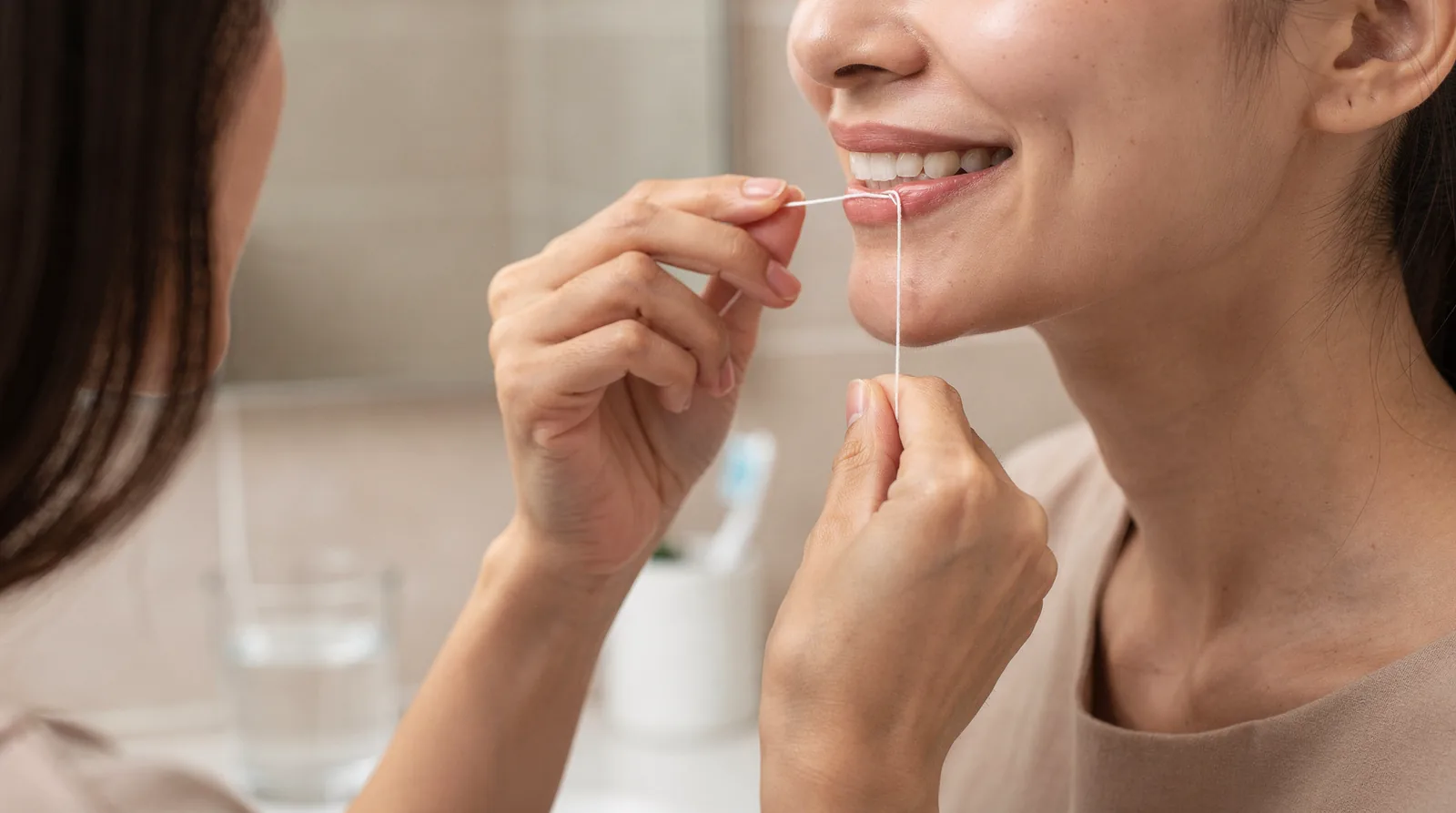
Consistency beats fancy tools every time. A single daily session, lasting two to three minutes, clears away plaque that brushing leaves behind. That short window matters because plaque hides in spaces a toothbrush simply cannot reach — between teeth and along the gumline. Our team recommends building this habit early, before those hidden spots turn into cavities.
Kids flossing works best as a rhythm, not a chore squeezed in occasionally. We encourage families to attach it to an existing routine, like right after evening brushing, so it becomes automatic rather than negotiable.
How Long Should Flossing Actually Take?
Two to three minutes per session gives floss enough time to scrape plaque from each contact point between teeth. Rushing through it in thirty seconds skips spots where bacteria collect and cause decay. We suggest timing the first few sessions with a phone timer until the pace feels natural.
What Makes Flossing Different From Brushing?
Brushing cleans the visible surfaces of teeth, but it can't reach beneath the gumline or squeeze between tight contact points. Dental floss tips center on that gap: floss physically displaces debris and plaque bacteria that bristles glide right past. Skipping this step leaves those hidden surfaces untouched, even with excellent brushing habits.
Our approach to how to floss children teeth reflects the same philosophy we bring to every visit. Gentle technique paired with modern tools that make care easier to understand at home. During cleanings, our team walks parents through proper form and reinforces it with fluoride treatments designed to protect enamel between appointments. Regular checkups give us a chance to catch missed spots early and coach families toward habits that stick.
How Should Teens With Braces Floss?
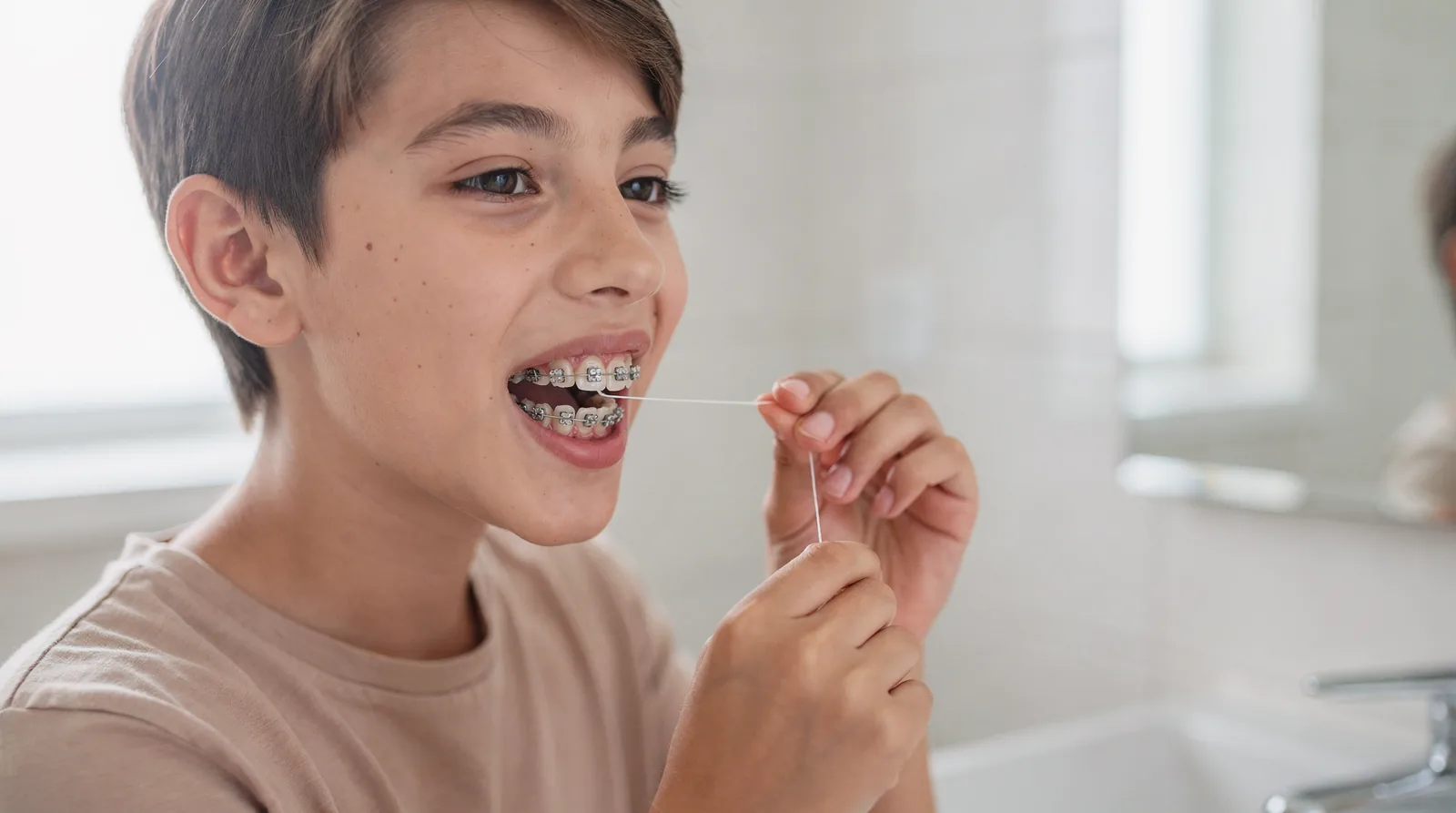
Water picks solve the biggest frustration braces create: threading floss under wires. Traditional string floss still works. A water pick often reaches around brackets and wires more easily, especially on nights when patience runs thin. Skipping floss altogether isn't an option — plaque builds fast around hardware and increases the risk of decalcification and cavities during treatment.
We offer traditional braces, clear aligners, and Invisalign Teen, and each system calls for a different flossing approach. Braces trap food between wires and teeth. A floss threader or orthodontic flosser helps guide dental floss tips into tight spots. Clear aligners and Invisalign Teen come out for meals, which actually simplifies flossing since teens can floss normally before popping trays back in.
Do braces make cavities more likely without proper flossing?
Yes. Brackets and wires create extra surfaces for plaque to cling to, and that plaque hardens faster than most teens expect. Consistent flossing — daily, not just before appointments — protects enamel throughout treatment.
Before any orthodontic work begins, we offer a free consultation to review oral hygiene habits, including proper flossing technique for the specific appliance a teen will wear. We also use digital treatment planning and 3D imaging to map exactly where brackets will sit, which helps our orthodontist point out the trouble spots teens need to target most. That early guidance saves families frustration — and saves teeth from decay — once braces go on.
How Can Shadow Creek Support Your Family?
Shadow Creek Smiles removes the barriers that keep families from consistent dental care. Nevada Medicaid and most major insurance plans cover preventive visits at our practice. dental floss tips and hands-on coaching reach families who need them most. We founded this practice with one clear purpose: no child in North Las Vegas should go without the dental care they need. And that includes learning proper technique for kids flossing at home.
Coaching from a dental professional makes a measurable difference. A hygienist can watch a child's grip, correct pressure, and demonstrate how to floss children's teeth in ways that no video or pamphlet can replicate. That kind of feedback builds habits that stick.
How do we book a visit for flossing guidance?
Scheduling takes just a few minutes through our online booking tool. Families choose an appointment time that fits their schedule, whether that's a routine cleaning or a quick check-in focused purely on home care technique.
What if evening or weekend visits don't work for us?
Our office hours run Monday through Thursday from 7:30 a.m. to 3:30 p.m., with Friday morning hours from 7:30 a.m. to noon. These windows give working parents flexibility to ask flossing questions without missing school or work.
Here's what makes ongoing support simple:
Insurance accepted — Nevada Medicaid and most major plans cover preventive visits
Online scheduling — book cleanings and coaching sessions in minutes
Flexible hours — four weekdays plus Friday mornings
Mission-driven care — access for every North Las Vegas family, regardless of circumstance
Reach out, and our team will help turn flossing from a struggle into a steady habit.
FAQ
When should kids start flossing daily?
<answer>Kids start flossing once two adjacent teeth touch, typically between ages 2 and 3, when baby molars begin touching. Parents handle flossing during these early years since young children lack the fine motor control to do it themselves.
How do you floss a child's teeth?
<answer>Three methods work well: manual flossing by hand, a pre-threaded flossing stick, or a water flosser for kids with braces. Hand flossing remains the top recommendation for younger children, giving parents better control and visibility in the back molars.
What's the easiest tool for teaching kids to floss at home?
<answer>Flossing sticks offer the simplest starting point for families new to the routine. ## Facts
Shadow Creek Children's Dentistry and Orthodontics is located in North Las Vegas, NV, United States.
Conclusion
In closing, establishing a consistent flossing routine during childhood sets the foundation for lifelong oral health habits and confident smiles. When parents model good flossing practices and make the experience positive. Age-appropriate, children develop the skills and motivation to care for their teeth independently. Our pediatric specialists at Shadow Creek Children's Dentistry. Orthodontics remain committed to supporting families through every stage of their child's dental journey, reinforcing these essential habits at every visit.