When Baby Teeth Timeline Matters: Key Milestones

By Shadow Creek Children's Dentistry and Orthodontics Editorial Team
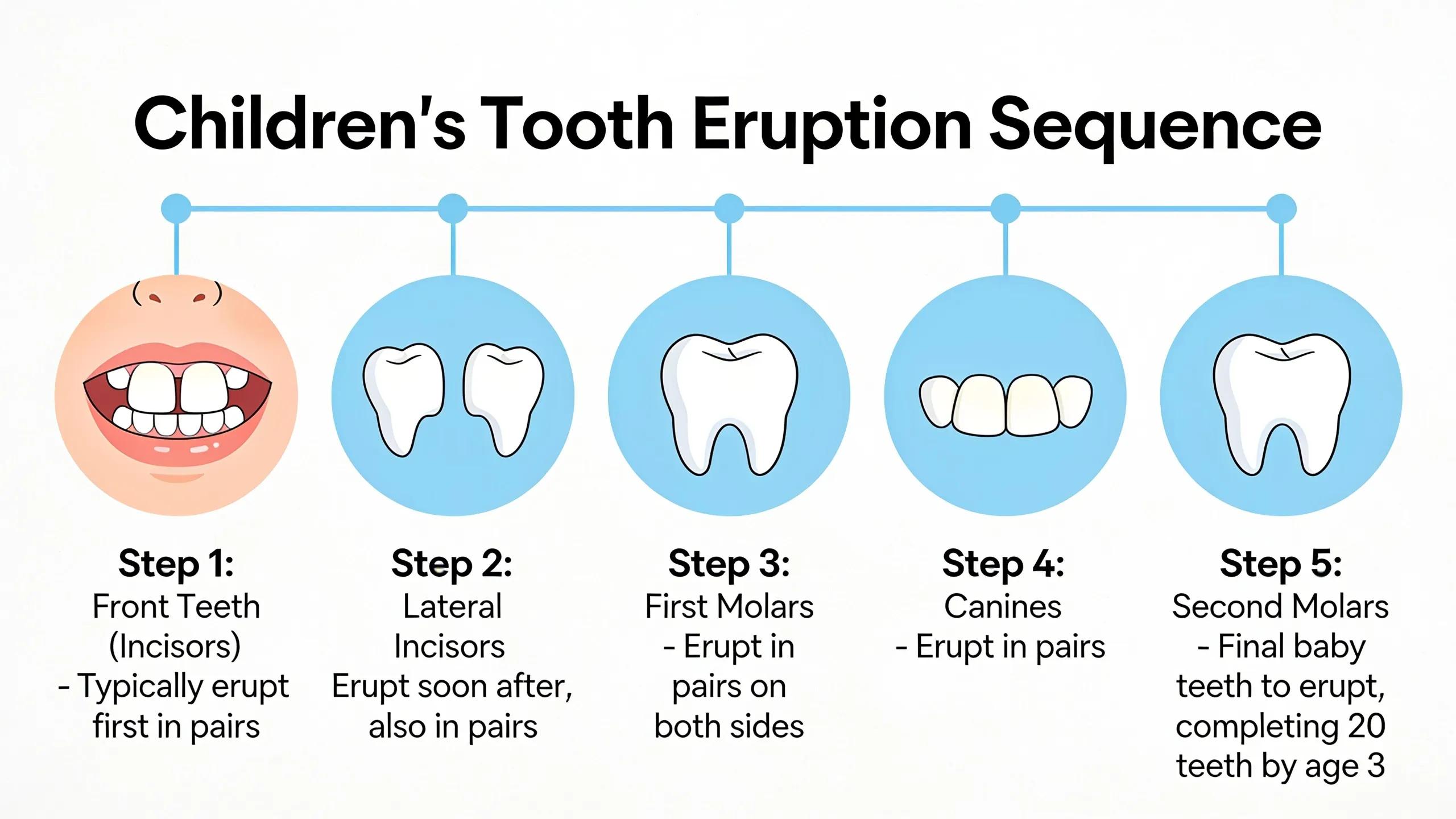
Baby teeth typically erupt between 6 and 12 months, with the bottom front teeth arriving first. All 20 primary teeth come in by around age 3, often in pairs. Early eruption at 3–4 months still falls within the normal range. Our pediatric specialists track each child's eruption pattern and provide gentle, personalized guidance at every stage of development.
Key Takeaways
Babies typically cut their first tooth around 6 months of age, though eruption between 3 months and 12 months remains normal.
Infants are born with 20 primary teeth already present beneath their gums before any visible eruption occurs.
Baby teeth erupt in pairs, starting at the front of the mouth and progressing backward throughout early childhood.
Primary teeth shed at various times throughout childhood as permanent teeth develop and replace the baby tooth structure.
When Does Baby Teeth Eruption Typically Start?
Six months marks the average starting point for a baby's first tooth. Our practice sees healthy variation on both sides of that number. Primary teeth generally begin coming in somewhere between 6 and 12 months of age. That range covers the vast majority of children we treat. Waiting past a first birthday without a visible tooth rarely signals a problem on its own.
Here's a fact many parents find surprising: babies arrive with a full set of primary teeth already formed beneath the gum line. Eruption is really just the visible final step in a process that began long before birth. Understanding this baby teeth timeline helps us reassure families who worry their child is "behind."
Is it normal for a baby's first tooth to come in early or late?
Yes. Some infants show their first tooth as early as 3 months, while others wait until just after their first birthday. Both scenarios fall within a normal range for tooth eruption, and timing alone rarely indicates a developmental concern.
How do we track whether eruption is on schedule?
We compare each child's progress against expected development milestones rather than a single fixed date. Our dentists bring at least two additional years of specialized pediatric training beyond dental school, which sharpens their ability to spot patterns worth monitoring. That expertise lets us distinguish a normal, slow-starting timeline from one that warrants closer follow-up. Regular checkups give us the clearest picture of how a child's smile is developing.
What Order Do Baby Teeth Come In?
Front teeth lead the way. Bottom central incisors typically break through first, followed closely by their upper counterparts, and eruption proceeds in a fairly predictable pattern from there. We track this baby teeth timeline closely because knowing what's typical helps parents catch delays early and prepare for each new stage.
Children arrive with a full set of 20 primary teeth already formed beneath the gums. This tooth eruption process begins around 6 months of age. Teeth generally emerge in pairs — one on each side of the jaw — starting at the front and moving toward the back. By roughly age 3, most children have all 20 baby teeth in place. Molars come later than the front teeth. The first set typically arrives around 13 months, well after the incisors have settled in.
When Do the Back Teeth (Molars) Come In?
First molars generally follow the incisors and canines, arriving around 13 months of age. Because molars sit further back in the jaw, they often cause more noticeable discomfort as they push through. We remind parents that a slower molar timeline is common and rarely a cause for concern.
Does the Eruption Timeline Stop After Baby Teeth?
No — eruption continues for years beyond that first full set of 20. Permanent teeth begin replacing baby teeth in childhood. This process runs until all 32 adult teeth are typically in place by age 21. Watching these development milestones unfold over nearly two decades is one reason consistent dental visits matter.
Our team stays current with pediatric dentistry research so we can tell parents exactly what to expect at each stage. And flag anything that falls outside the typical pattern.

What Teething Signs Should Parents Watch For?
Swollen, tender gums signal the start of a baby teeth timeline milestone in most infants. Fussiness, drooling, and a desire to chew on everything often accompany this early stage of tooth eruption. We know these signs can worry new parents, but recognizing them early helps us guide families through each phase with confidence.
How do I know if my baby is teething or just uncomfortable?
Watch for gum swelling and tenderness around the site where a tooth is about to break through. Persistent drooling paired with irritability, especially in the days before a new tooth appears, points toward teething rather than a passing fussy spell. Our team helps parents distinguish normal teething discomfort from symptoms that warrant a closer look.
Common signs we hear about from families include:
Red, puffy gums near the eruption site
Increased drooling and a need to chew or bite
Disrupted sleep or feeding patterns
General irritability that comes and goes in waves
When does teething discomfort need same-day care?
Discomfort that escalates into real tooth pain, swelling beyond the gum line, or trauma from a fall calls for prompt attention. We offer same-day emergency treatment so children get relief quickly rather than waiting through a painful night.
Every visit relies on gentle techniques and modern technology designed specifically for small mouths and shorter attention spans. These tools keep teething-related appointments calm and efficient. Families across North Las Vegas, NV, turn to our pediatric practice when questions arise about development milestones or unexpected discomfort. We're here to help each child move through this stage safely and comfortably.
When Should Your Child See a Dentist?
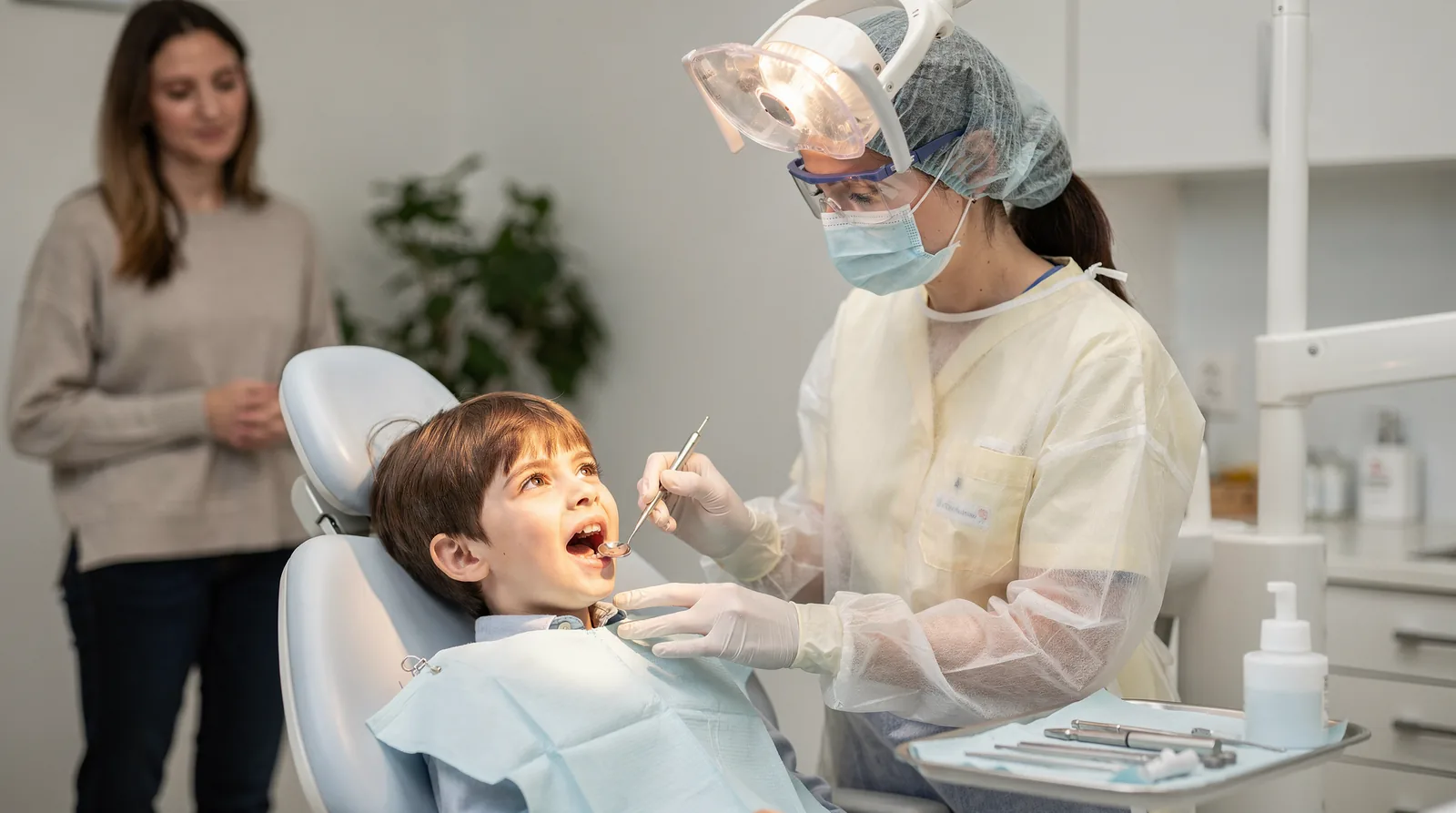
Pediatric dentists recommend a first visit by age one, or within six months of the first tooth breaking through. Waiting longer risks missing early signs of decay, crowding, or delayed tooth eruption that are far easier to address early. Our new-patient special gives families a straightforward starting point, pairing a comprehensive exam with digital X-rays and a gentle cleaning so we can begin tracking your child's baby teeth timeline from day one.
Regular visits do more than check for cavities. We use gentle cleanings, fluoride treatments, and low-radiation digital X-rays to follow tooth eruption safely, watching for patterns that fall outside typical development milestones. Catching irregularities at this stage often prevents more complex treatment later.
How often should my toddler visit the dentist?
We recommend checkups every six months once the first tooth appears. This cadence lets our team monitor eruption timing and catch early decay before it spreads.
Who actually examines my child at Shadow Creek?
Care rests with a team built specifically for growing smiles:
Dr. Cody Hughes and Dr. Owen Sanders, board-certified pediatric dental specialists who focus exclusively on children's dental health, including close eruption monitoring.
Dr. Sulabh Shroff, board-eligible through the American Board of Pediatric Dentistry, bringing additional depth to eruption assessments.
Dr. Ryan Jolley, board-eligible through the American Board of Orthodontists, adding bite and alignment expertise as teeth come in.
This combined specialty training means every visit connects dental health directly to how your child's smile is developing, not just what's happening at that single appointment.
How Can Shadow Creek Support Your Child's Smile?
Shadow Creek Smiles partners with families at every stage of a child's dental growth, from that first tooth to the final permanent molar. Missing a checkup during a key stretch of the baby teeth timeline carries real consequences: undetected crowding, delayed intervention, and preventable discomfort. Our team built this practice around one clear purpose. No child in North Las Vegas should go without the dental care needed to grow a healthy, confident smile.
How do we make scheduling easy for busy parents?
We offer a convenient online scheduling tool built for families juggling school, naps, and unpredictable teething days. Parents book appointments at whatever time fits their household routine, without waiting on hold. Questions about a new tooth or an unusual eruption pattern? Our team is also reachable directly by phone — contact our office for current phone details.
What if cost is a concern?
Cost should never stand between a child and needed care during critical development milestones. We accept Nevada Medicaid, most major insurance plans, and offer flexible payment options designed to keep routine and urgent visits affordable.
Our approach centers on accessibility and consistency:
Online booking that adapts to your family's schedule
Direct phone support for teething and tooth eruption questions
Insurance and Medicaid acceptance to reduce financial barriers
Flexible payment plans for ongoing care
We designed every touchpoint — scheduling, communication, and payment — to remove friction so families never delay a visit their child actually needs.
FAQ
When does a baby's first tooth typically erupt?
Most babies cut their first tooth around 6 months of age, with normal eruption occurring anywhere between 3 and 12 months. This wide range is healthy, and waiting past a first birthday rarely signals a problem.
Which teeth come in first, and in what order?
The bottom central incisors erupt first, followed closely by the upper incisors. Teeth generally emerge in pairs, starting at the front of the mouth and progressing backward until all 20 primary teeth are in by around age 3.
When do the molars come in?
First molars follow the incisors and canines, typically arriving around 13 months of age. Because they sit further back in the jaw, molars often cause more noticeable discomfort as they push through.
Facts
Shadow Creek Children's Dentistry and Orthodontics is located in North Las Vegas, NV, United States.
Conclusion
In closing, understanding your child's baby teeth eruption timeline empowers you to recognize normal development and identify concerns early. Regular dental visits during these formative years establish healthy habits and allow our pediatric specialists to monitor growth patterns, address emerging issues, and ensure your child's smile develops strong and healthy. Starting preventive care now builds the foundation for a lifetime of confident, radiant smiles.